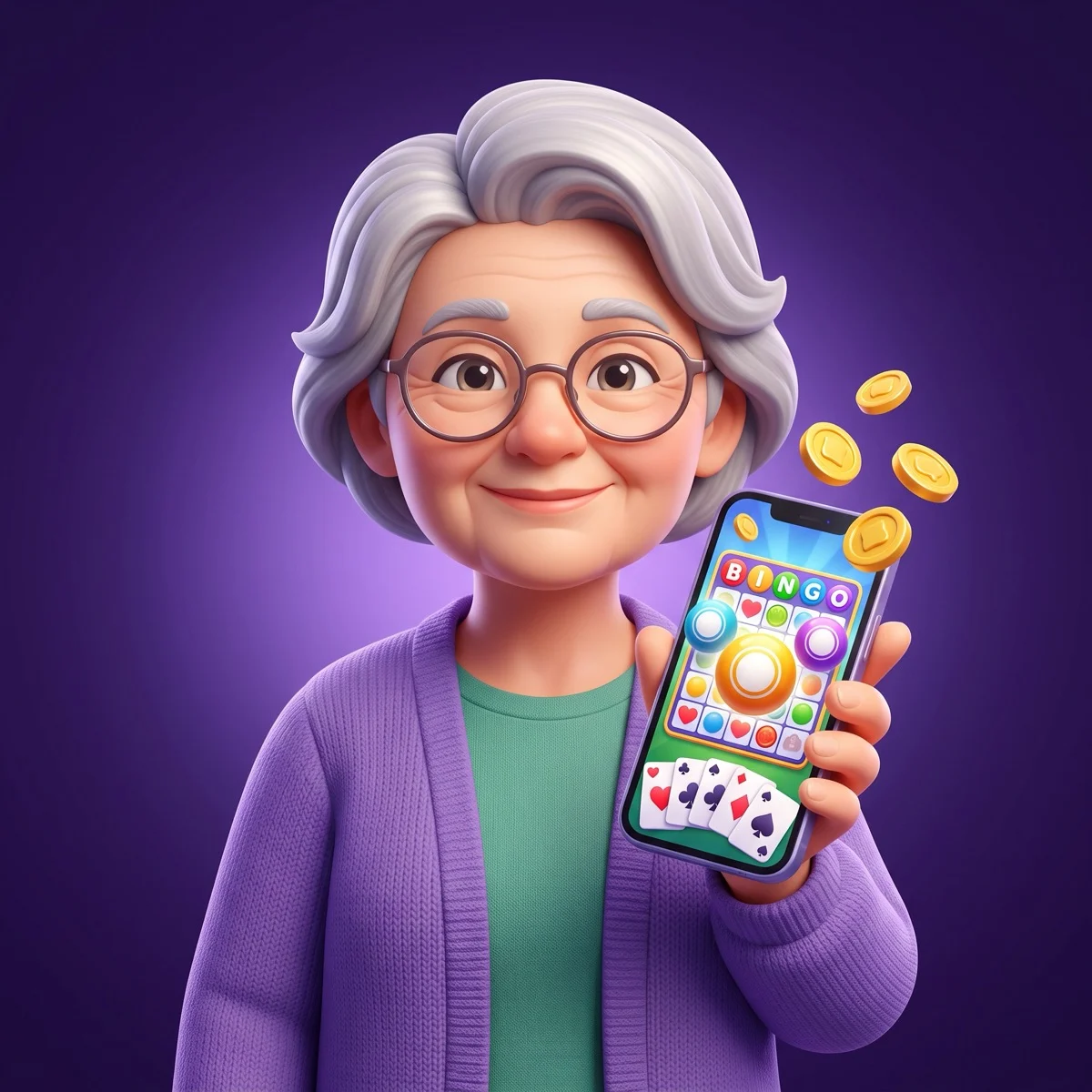
You've got time, a smartphone, and a lifelong love of the crossword or the bingo card. Somewhere online, an ad promises you can turn that into "$500 a day." You can't. But here's the honest surprise: you can turn the games you'd play anyway into a little real fun money, if you know which ones actually pay, what the "brain training" science really says, and how to sidestep the scams that target people your age harder than any other. This is the straight version, from someone who works on player trust for a living.
- Yes, seniors can earn a little. Roughly $5 to $40 a month for casual play, fun money, not a retirement supplement.
- The habit is already there. About 45% of U.S. adults 50+ play video games, and 77% say they play to keep their minds sharp (AARP, 2023).
- No game prevents dementia. Lumosity paid the FTC $2 million for that claim (FTC, 2016).
- Scams target seniors most. Adults 60+ lost $4.9 billion to fraud in 2024, the most of any age group (FBI IC3, 2024).
- You never have to spend. Play free practice mode first; any "$500 a day" pitch is a scam.
Let's be clear about what "brain games that pay" means for someone on a fixed income. It doesn't mean a side income. It means the games you enjoy can hand you a small bonus, and you can play and practice them for free, so the downside is your time and the upside is a few dollars. Keep that frame and the rest of this guide falls into place. We'll start with the honest yes.
Can Seniors Really Make Money Playing Brain Games?
Yes, a little, and the audience is bigger than most people think. In 2023, AARP's Gamers 50-Plus report found about 45% of U.S. adults 50 and older play video games, roughly 52 million people, and 77% of those players say they game partly to keep their minds sharp (AARP, Gamers 50-Plus, 2023). The habit is already there. The only real question is how to add a small, honest payout without getting burned.
The realistic number is modest on purpose: about $5 to $40 a month for casual play. That's coffee money, or a little padding, not a way to stretch Social Security. And you're plainly equipped for it: in 2026, Pew Research reported that 78% of adults 65 and older own a smartphone and 90% use the internet (Pew Research Center, 2026). You don't need new hardware or new skills. You need the right games and a healthy dose of skepticism, which is exactly what the rest of this guide gives you. For the deeper math on payouts, see how much you can realistically earn.
Can seniors make money playing brain games? Yes, modestly. About 45% of U.S. adults 50 and older play video games and 77% say they play to stay mentally sharp (AARP, 2023). Casual earnings run roughly $5 to $40 a month, fun money rather than income, and 78% of adults 65+ already own the smartphone needed to play (Pew Research Center, 2026).
Which Brain Games Pay Real Money and Fit Seniors Best?
The best fit is the classics you already know: bingo, solitaire, crossword and word search, in real-cash versions with a free practice mode, simple rules, and a low cash-out around $5. Skill decides the payout, not luck and not fast reflexes, so the pattern-spotting and word recall you've sharpened over decades are exactly what pays. Nearly 3 in 10 U.S. players are now 50 or older, and most of them play on mobile (ESA, Essential Facts, 2024), so these games are built for the phone in your pocket.
Bingo
Pure pattern-spotting and attention, with a social feel that mirrors the hall. You daub numbers as they're called and race to complete a pattern. It's easy to learn, forgiving if you glance away, and the cash version simply adds a small prize for finishing faster or cleaner. Start in the free rooms on Bingo Prizes and see our bingo strategy tips for higher scores.
Solitaire
Planning and sequencing at your own pace. Solitaire rewards thinking a move or two ahead, and the cash version is a score race, not a gamble on the deck. There's no opponent breathing down your neck, which many players prefer. Learn the paid format in how to play solitaire for cash, then practice free on Solitaire.
Crossword
Vocabulary and recall, with zero time pressure if you pick an untimed room. If you already do the newspaper puzzle with your morning coffee, this is the same pleasure with a small prize attached. It leans on a lifetime of words, which is a real edge for older players. Try it free on Crossword.
Word Search
Visual scanning and focus, and the gentlest learning curve of the four. You hunt hidden words in a grid, which is calming and genuinely absorbing. It's a great first paid game because the rules are obvious in seconds. See how word search cash works and practice on Word Search.
Here's how the four compare on the things that actually matter to a 65-plus player: how easy it is to learn, whether you can play without a stopwatch, and what kind of thinking it exercises.
| Game | Brain skill it uses | Learning curve | Low-pressure? (no fast reflexes) |
|---|---|---|---|
| Bingo | Attention, pattern-spotting | Very easy | Yes, gentle pace |
| Solitaire | Planning, sequencing | Easy | Yes, your own pace |
| Crossword | Vocabulary, recall | Easy if you do puzzles | Yes, untimed rooms |
| Word Search | Visual scanning, focus | Gentlest of all | Yes, very calm |
What we found testing free mode with senior-friendly settings. We turned on the largest text size and sound cues and played each game for a while before touching a cash room. Word search and bingo felt the most relaxing and were learnable in under a minute. Solitaire and crossword took a few rounds to feel natural but rewarded patience. None needed quick reflexes, which is the real point: these reward thinking, not twitch speed.
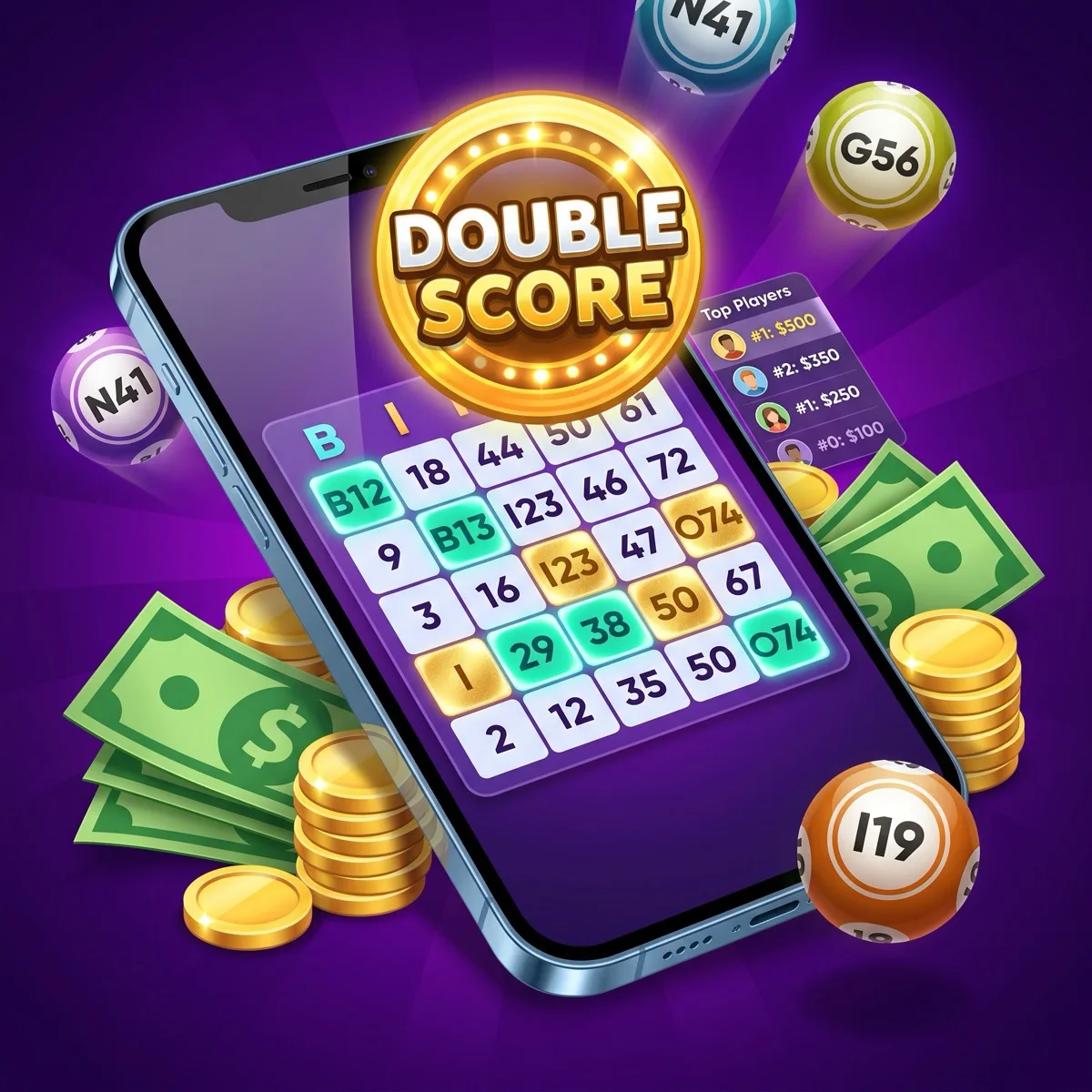
Which brain games pay and fit seniors best? Bingo, solitaire, crossword and word search, in real-cash versions with a free practice mode and a roughly $5 cash-out. Skill decides the payout, not luck or fast reflexes, so pattern-spotting and word recall matter most. Nearly 3 in 10 U.S. players are now 50 or older and most play on mobile (ESA, 2024).
Do Brain Games Actually Keep Your Mind Sharp?
They can help a little, and they're genuinely enjoyable, but be skeptical of the big promises. The landmark ACTIVE trial followed 2,832 older adults and trained them in reasoning and speed of processing. Those gains lasted up to 10 years, while memory training showed no lasting effect (National Institute on Aging, 2014). So some effects are real, but they're narrow. You mostly get better at the specific thing you practice.
That's the honest middle ground, and the research backs it. In 2014, about 70 scientists signed a consensus statement, organized by the Stanford Center on Longevity and Germany's Max Planck Institute. Their verdict: "no compelling scientific evidence" that brain games improve broad, everyday thinking or hold off decline (Stanford Center on Longevity, 2014). The gains rarely transfer beyond the trained task. Newer work is more hopeful in spots. One long-term analysis of the ACTIVE speed training even hinted at lower dementia risk. But that's a single, contested finding, not settled science, so no honest guide would sell it as fact.
Which is why one number should stick with you. In 2016, Lumosity paid $2 million to settle FTC charges over its advertising. The company had deceptively claimed its games could delay cognitive decline and protect against dementia (Federal Trade Commission, 2016). If a "brain training" app promises to keep Alzheimer's away, that's the exact claim a regulator has already punished. Play these games because they're fun and mentally engaging, and treat any sharper focus as a nice bonus. For the full science, we wrote a whole piece on whether brain games actually work.
Do brain games keep your mind sharp? A little, but no game prevents dementia. The ACTIVE trial found reasoning and speed gains lasting 10 years, yet memory training showed no lasting effect (National Institute on Aging, 2014), and a 2014 consensus of about 70 scientists found no compelling evidence of broad benefit. Lumosity paid the FTC $2 million in 2016 for overselling exactly that claim.
Play the Classics You Already Love, Free
Bingo, solitaire, crossword and word search on Atay are free to practice, with optional cash rooms and a low $5 cash-out. Skill sets your score, not luck: skill, not gambling.
Browse Atay Games FreeHow Much Can a Retiree Realistically Earn?
Honestly, not much, and that's the point. Personal-finance outlets that test these apps put casual earnings at roughly $1 to $3 an hour, which works out to about $5 to $40 a month for most players (NerdWallet, 2024–2025). Dedicated players who specialize in one game can reach $200 to $500 a month, but real-cash rooms use entry fees, so you can also lose. Nobody is paying a bill with this, and any honest source will tell you so.
On a fixed income, that reframes everything. The average Social Security retirement benefit is around $2,000 a month (Social Security Administration, 2026), and Federal Reserve data shows median retirement savings of about $200,000 for households aged 65 to 74 (Federal Reserve, 2022 data). Against numbers like those, a few dollars from games is a treat, not a plan. So treat any winnings as a small bonus you'd be fine losing, and never as budget you're counting on. And burn this into memory: no legitimate game pays a normal player "$500 a day." That promise is always bait.
What You'll Realistically Earn vs. the "$500 a Day" Lie
Source: NerdWallet and Atay Games' own earnings breakdown, 2024–2026.
How much can a retiree earn? Casual play pays roughly $1 to $3 an hour, or $5 to $40 a month (NerdWallet, 2024–2025); dedicated specialists can reach $200 to $500 a month but with real entry fees and real losses. With the average Social Security benefit near $2,000 a month, treat game winnings as a small bonus, never as fixed-income budget, and know that "$500 a day" is always bait.
One more honest note for planning: winnings are taxable even on a fixed income, and even when no tax form is issued. If you start winning more than pocket change, read our plain-English guide to taxes on skill game winnings so there are no surprises.
How Do You Play Safely and Spot the Scams?
This matters more for our age group than any other, so it gets its own section. In 2024, adults 60 and older reported $4.9 billion in fraud losses to the FBI, the most of any age group, across more than 147,000 complaints (FBI Internet Crime Complaint Center, via AARP, 2024). Separately, the FTC reported that "get paid to play" and task-scam losses have been climbing fast. Scammers know retirees have savings and time, and "earn money playing games" is a favorite hook. So the safety rules below aren't optional extras. They're the main event.
Fortunately, the tells are simple once you know them. Here are the red flags that should stop you cold, and the green flags of a legit game.
- Red flag: big daily cash promises. "$500 a day," "earn $1,000 this week." No legitimate game pays normal players anywhere near that.
- Red flag: a fee to withdraw your own money. This is the hardest tell of a scam. You never pay a "tax," "unlock fee," or "verification deposit" to release winnings. If money has to flow from you to them first, walk away.
- Red flag: no named payout method or real support. Legit apps name how you get paid (PayPal, bank, card) and a real minimum. Bait just flashes cash with no mechanism.
- Red flag: urgency, gift cards, or crypto. "Act now" pressure, or a request to pay or be paid in gift cards or cryptocurrency, is a scam signature. Here's how gift card scams show up in game apps.
- Green flag: a free practice mode. An honest game lets you play and get good without spending, then makes cash entry optional.
Fraud Losses Reported by Older Adults Are Climbing
Source: FTC, Protecting Older Adults report and FBI IC3 Elder Fraud Report, 2024–2025.
If an app clears those flags and you install it, the job shifts to vetting the app itself: recorded results, named payouts, a real cash-out history. We wrote that full checklist out in how to spot fake money game apps, and made the broader case for the category in are real cash skill games legit. If you want to know where our own games stand, we answered that plainly too: is Atay Games legit.
How do seniors play safely? Treat scam-avoidance as the main event, because adults 60+ reported $4.9 billion in fraud losses in 2024, the most of any age group (FBI IC3, 2024). The rules that protect you: no legit game pays "$500 a day," and none ever charges a fee to withdraw your own winnings. Insist on a free practice mode and a named payout method.
How Do You Get Started Comfortably?
You don't need to spend a cent to begin, and you don't need to be a tech wizard either. Pick the classic you already love, turn on the largest text size and sound cues, and play the free practice mode until it feels natural. Only then decide if a small entry is worth it. Since 78% of adults 65 and older already own a smartphone (Pew Research Center, 2026), you almost certainly have everything you need in hand.
A few comfort-first pointers. Set text and contrast high in your phone's accessibility settings, most games inherit them. Choose untimed or relaxed rooms while you learn, so there's no clock stress. If you're on Android, note that real-money games often aren't on the Google Play Store for policy reasons, so install from the developer's own official site rather than a random mirror; we explain the why and the how in why real money games aren't on Google Play. Before any cash play, decide a small fixed budget, say $5 or $10 for the month, and never chase a loss past it. When you're ready to try a real room, our guide to how to cash out walks through withdrawals step by step. Prefer to just play for free forever? That's completely fine, and you can browse all the games and stay in practice mode as long as you like.
Here's the one reframe that keeps this healthy and fun: play the game you'd play anyway, not the highest-paying one. Don't chase a "brain-training program" or the biggest prize pool. Pick the bingo card or the solitaire deck you already enjoy, in a version that happens to pay a small bonus and is free to practice. Enjoyment plus a free floor beats optimizing for dollars every time, and it's the surest way to make sure a hobby stays a hobby. At the other end of the age range, we cover money-making games for college students with the same honest framing.
How do seniors start comfortably? You never have to spend. Pick the classic you love, turn on large text and sound cues, and play the free practice mode first, then decide if a small entry is worth it. With 78% of adults 65+ owning a smartphone (Pew, 2026), you already have the tool. Set a small fixed budget before any cash play and never chase a loss.
Frequently Asked Questions
Can seniors make money playing brain games?
Yes, a little. It's modest fun money, roughly $5 to $40 a month for casual play, not a retirement supplement. About 45% of U.S. adults 50 and older already play video games (AARP, 2023), and the best fit pays real cash in short skill games like bingo, solitaire, crossword and word search you can practice for free.
What brain games pay real money for older adults?
The classics you already know: bingo, solitaire, crossword and word search, in real-cash versions with a free practice mode and a low cash-out around $5. Skill decides the payout, not luck or fast reflexes, so pattern-spotting and word recall matter more than a quick thumb. See how to play solitaire for cash.
Do brain-training games actually improve memory?
They can help a little and are enjoyable, but no game prevents dementia. The ACTIVE trial found reasoning and speed gains lasting up to 10 years, yet memory training showed no lasting effect (NIA, 2014). Lumosity paid the FTC $2 million in 2016 for overselling these claims. More in do brain games work.
Are money games for seniors a scam?
The category is real, but the scams target this age group hardest. Adults 60 and older reported $4.9 billion in fraud losses in 2024 (FBI IC3, 2024). Any app promising "$500 a day," or one that asks a fee to withdraw your winnings, is a scam. Learn the tells in how to spot fake money game apps.
How much can a retiree realistically earn?
Not much, and that's the point. Casual play runs about $1 to $3 an hour, or $5 to $40 a month; dedicated specialists can reach $200 to $500 a month, but with real entry fees and real losses. On a fixed income, treat any winnings as a small bonus, never budget you count on. See realistic earnings.
Do I have to spend money to play?
No. Every honest game should let you play a free practice mode with no deposit, so you can enjoy it and get good without spending a cent. Cash entry is always optional and should sit on a small, fixed budget you decide in advance. When you're ready, here's how to cash out.
The Bottom Line for Seniors and Retirees
So, can you make money playing brain games in retirement? Yes, a little, honestly, if you play the classics you already love in versions that happen to pay, keep your expectations at fun-money level, and stay alert to the scams that chase this age group. The games are real, the small payouts are real, and the joy of a good crossword or a clean bingo is very real. The "$500 a day" fantasy is not. Five things to carry with you:
- It's fun money, not a supplement. Roughly $5 to $40 a month for casual play, a treat and not a plan.
- Play the game you'd play anyway. Bingo, solitaire, crossword and word search, in a free-to-practice paying version.
- No game prevents dementia. Brain games are good fun and mildly engaging; Lumosity paid $2M for claiming more.
- You never pay to get paid. A fee to unlock winnings is the surest sign of a scam.
- Start free, budget small. Practice mode costs nothing; decide a limit before any cash play.
Sources
- AARP Research, Gamers 50-Plus (about 45% of adults 50+ play video games, ~52 million people; 77% play to keep their minds sharp), 2023, retrieved 2026-07-23, aarp.org
- Pew Research Center, Internet use and smartphone ownership: digital divides in the U.S. (78% of adults 65+ own a smartphone; 90% use the internet), January 2026, retrieved 2026-07-23, pewresearch.org
- Entertainment Software Association, Essential Facts About the U.S. Video Game Industry (nearly 29% of players are 50+), 2024, retrieved 2026-07-23, theesa.com
- National Institute on Aging, Cognitive training shows staying power (ACTIVE trial, 2,832 older adults; reasoning and speed gains persisted 10 years; memory training showed no lasting effect), 2014, retrieved 2026-07-23, nia.nih.gov
- Stanford Center on Longevity and Max Planck Institute for Human Development, A Consensus on the Brain Training Industry (~70 scientists; "no compelling scientific evidence" of broad transfer), 2014, retrieved 2026-07-23, longevity.stanford.edu
- Federal Trade Commission, Lumosity to Pay $2 Million to Settle FTC Deceptive Advertising Charges (deceptive claims that games delay cognitive decline / protect against dementia), January 2016, retrieved 2026-07-23, ftc.gov
- Federal Reserve, Economic Well-Being of U.S. Households: Retirement and Investments (median retirement savings ~$200,000 for households 65–74), 2022 data (2024 publication), retrieved 2026-07-23, federalreserve.gov
- FBI Internet Crime Complaint Center (IC3), Elder Fraud Report (adults 60+ reported $4.9 billion in losses across 147,000+ complaints in 2024, the most of any age group), 2024 (reported 2025), via AARP, retrieved 2026-07-23, aarp.org
- Federal Trade Commission, Annual Report to Congress on Protecting Older Adults (older-adult fraud losses rising; task-scam losses climbing sharply), December 2025, retrieved 2026-07-23, ftc.gov
- NerdWallet, Game Apps That Pay Real Money (realistic casual earnings roughly $1–$3/hour), 2024–2025, retrieved 2026-07-23, nerdwallet.com
About this guide. This is an independent, good-faith guide based on public research, government data, and widely reported figures as of July 2026; statistics and rulings change, so verify current details on the sources linked above. Nothing here is financial, medical, or legal advice. Brain games are entertainment and are not a treatment for, or protection against, cognitive decline or dementia. Atay Games publishes skill-based real-cash games and competes in the broader mobile-gaming space, so treat the closing recommendation as our perspective. Atay's cash tournaments are skill-based contests, not games of chance, and are entertainment with optional upside, not an income source; most players win small amounts. Paid contests aren't available in every U.S. state; check your local eligibility, and play responsibly.
Turn the Games You Love Into a Little Fun Money
Bingo, solitaire, crossword and word search on Atay are free to play, with optional cash rooms, large-text friendly, and a low $5 cash-out. No pressure, no "$500 a day" fantasy: skill, not gambling.
Play Atay Games Free