I run player trust at Atay Games, so let me clear up the biggest misunderstanding first. If you searched "bingo strategy" expecting tips on which numbers to pick, here's the twist: in the real-money bingo apps everyone's playing in 2026 — Bingo Cash, Bingo Clash, Blackout Bingo — you don't pick your card at all. Every player gets the identical board and the same called numbers, and the winner is whoever scores fastest. That makes it a genuine skill game, which is why the skill gaming market reached roughly $47.3 billion in 2025 (Grand View Research, 2024), and why top players can win up to about $83 in a single Bingo Cash tournament (sidehustles.com, 2026). The catch is that not every platform plays fair — and one of the biggest is in court over it right now.
- It's speed, not luck. Every player gets the same board and the same called numbers, so there's no "better card." Daub each called number within a second or two — the faster you daub, the more each one is worth.
- Chain your bingos. Multiple bingos on one card trigger big bonuses, and a full blackout (all 25 numbers) can count as around 14 bingos at once (Skillz, 2025).
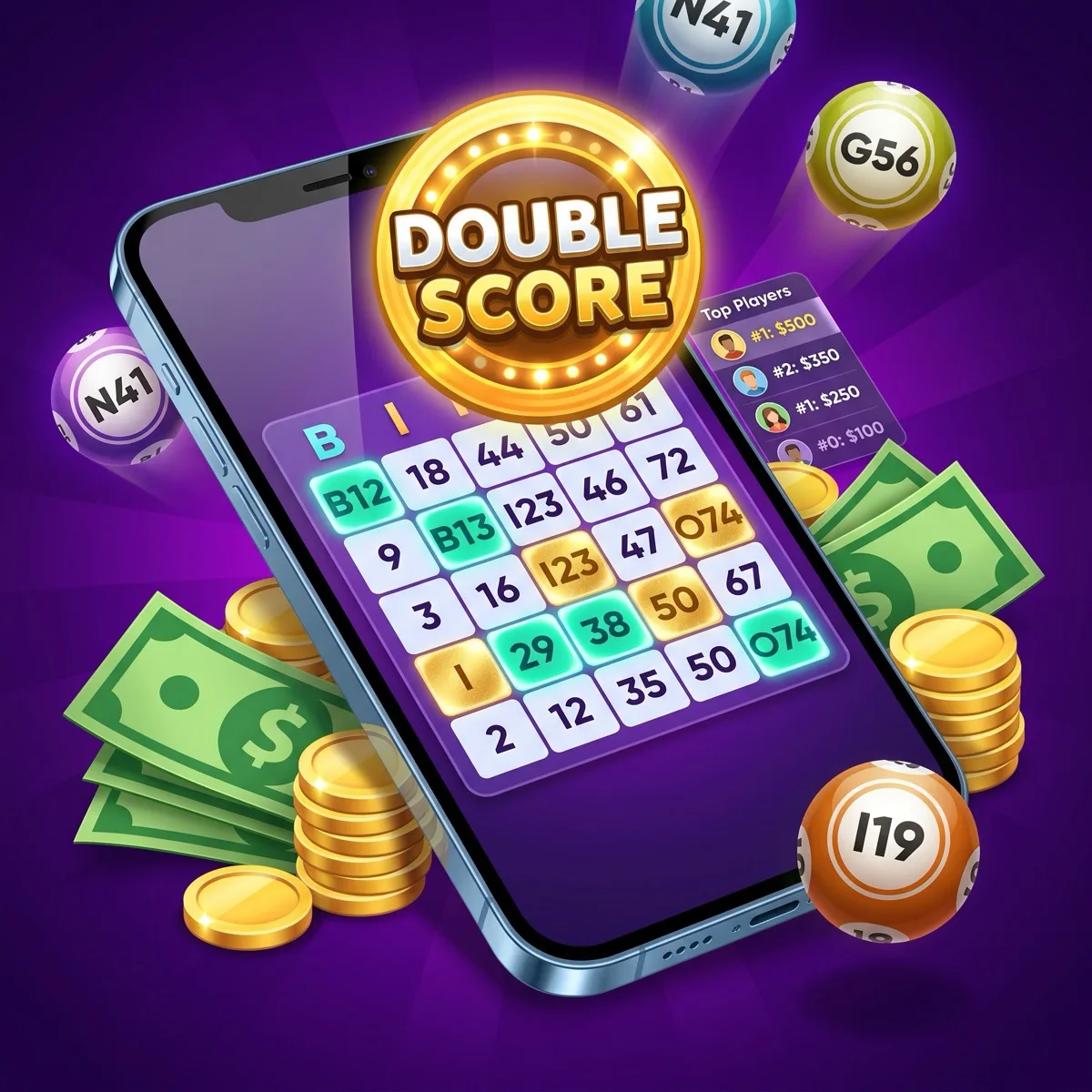
- Time your power-ups. Hold the Double Score booster (2× points for ~10 seconds) until a multi-bingo or blackout so you double your biggest haul — don't burn it on a single daub.
- Number "strategies" don't apply. Granville's Method and Tippett's Theory are "theoretical, not backed by statistical data" and assume you choose a card — which skill bingo removes (Bingo.org, 2026).
- The real risk is your opponent. AviaGames (Bingo Clash) faces a class action alleging bot opponents (Pandolfi v. AviaGames, 2023), and rival Skillz won a ~$43M patent verdict against it in 2024. Pick a platform with verified human players.
Is Bingo Skill or Luck? Why Modern Bingo Strategy Is Different
In real-money bingo apps, the outcome is decided by skill, not luck. Every player in your tournament gets the exact same board and the same sequence of called numbers, so nobody gets dealt a luckier card. Winning comes down to how fast and accurately you daub, how you chain bingos for bonuses, and how you time your power-ups. That's why these games qualify as skill games legally — and it's exactly why the old "pick the right card" bingo strategies are useless here.
Here's the mental model that matters: traditional bingo is a lottery you watch, and app bingo is a race you run. We weigh the evidence for both, including the case that bingo is still mostly luck, in is bingo a game of skill or luck? In a bingo hall, you buy cards and hope your numbers get called. In a cash app, the numbers are coming for everyone in the same order — your job is to react faster and score smarter than the person in the next seat.
Traditional bingo vs. skill bingo
The difference is the identical board. In a hall, different players hold different cards, so number distribution and card selection arguably matter. In a skill-bingo tournament, the board, the calls, and the clock are the same for every entrant. There is no card to choose and no luckier seat — which collapses the entire premise of classic bingo "systems."
Why that makes it a legal skill game
Most state courts apply a "predominance test": is the result driven mainly by skill or by chance? Because the identical-board format strips out card luck and leaves speed and decision-making, skill-bingo apps land on the skill side of that line. That's the legal mechanism that lets them pay cash where slot machines can't — more on the state map below.
What "strategy" means when you can't choose your card
Strategy in skill bingo is entirely about execution: reaction speed, daub accuracy, which squares you prioritize, and when you fire boosters. Those are learnable, repeatable skills — and they're the only things you actually control. Play real-money Bingo tournaments →

In real-money bingo apps, every player gets the identical board and the same called-number sequence, so the outcome is decided by skill — daub speed, multi-bingo chaining, and power-up timing — not luck. Because card selection is removed, the game qualifies under the legal predominance test as skill-dominant, which is why it can pay cash where games of chance cannot.
How Does Bingo Cash Scoring Actually Work?
Skill-bingo scoring rewards speed and combos. You earn points for every correctly daubed number. And the faster you daub a called number, the more it's worth — top players daub within a second or two (The Budget Diet, 2026). Claiming a bingo adds points, and landing multiple bingos on one card triggers big bonuses; a full blackout (all 25 numbers) can count as around 14 bingos at once (Skillz, 2025). But daubing a number that hasn't been called — or hitting "Bingo" without one — costs you points, commonly a penalty of around 25 each.
Speed-weighted daubing
This is the core lever. The game watches how quickly you tap a number after it's called, and pays you more for a fast, accurate daub than a sluggish one. Leaving the sound on helps — hearing the call lets you react before your eyes find the square. Over a two-minute round, those fractions of a second compound into the gap between cashing and busting.
Multi-bingo and blackout bonuses
One bingo is fine; two or three on the same card is where scores explode. Aiming your daubs at squares that complete more than one line at once is the single highest-value habit in the game. If the clock allows, pushing all the way to a blackout unlocks the biggest bonus on the board.
Penalties — the fastest way to bleed points
The flip side of speed is precision. A panicked daub on an uncalled number or a premature "Bingo" tap subtracts points — often around 25 a pop (The Budget Diet, 2026). Two or three of those can wipe out a clean round. Fast and accurate beats reckless every time.
What a Point Is Worth — Approximate Value by Action
Source: Atay Games illustrative model based on skill-bingo scoring references (The Budget Diet, 2026; Skillz, 2025). Figures are illustrative, not a fixed per-app formula.
Bingo cash scoring rewards speed and combos: faster daubs score more, claiming a bingo adds points, and chaining multiple bingos on one card up to a full blackout (about 14 bingos at once) triggers the biggest bonuses (Skillz, 2025). Daubing an uncalled number or a false "Bingo" costs points, commonly around 25 each (The Budget Diet, 2026).
What Are the 7 Best Bingo Cash Strategies to Win?
To climb a bingo-cash leaderboard, optimize for points-per-second, not just for getting "a bingo." The scoring engine rewards fast, accurate daubs and punishes sloppy ones, so the winning habits are the ones that squeeze more points out of every second without giving any back. These seven do exactly that, roughly in order of impact.

- Daub the instant a number is called. Speed is the single biggest scoring lever. Train yourself to tap on reflex, not after a search.
- Never daub an uncalled number. The ~25-point penalty is the fastest way to lose a winnable round. Accuracy protects your speed.
- Time the Double Score booster. Hold it until a multi-bingo or blackout is about to land, then fire — doubling your biggest haul, not a single tap.
- Prioritize squares that complete multiple lines. A daub that advances two bingos at once is worth far more than one that advances a single line.
- Push for blackout when the clock allows. The blackout bonus is the largest on the board. If you're ahead on the daub race, chase it.
- Leave the sound on. Hearing the call lets you react a beat sooner than reading it — small per-daub, large per round.
- Drill the format free first. Practice tournaments cost nothing and build the reflexes that win cash ones. Don't pay to learn the pace.
How much does each habit actually move your score?
Nobody quantifies this, so here's our own model. The biggest swings come from raw daub speed and from not giving points back to penalties; booster timing and multi-line targeting are close behind; playing extra cards and sound-on are real but smaller edges. Rank your practice that way — fix speed and accuracy first, then layer the rest.
Tactic Impact — Estimated Score Lift, Ranked
Source: Atay Games illustrative ranking based on skill-bingo scoring mechanics (The Budget Diet, 2026; KashKick, 2026). Estimates, not measured per-app values.
For tactics that carry across every skill game we make — bankroll discipline, bracket selection, tilt control — see our broader guide to skill-based cash game tips to win. And for what this looks like over weeks of real play, read one player's free-mode-to-finals progression.
To win bingo cash tournaments, optimize for points-per-second: daub the instant a number is called, never daub an uncalled number, hold the Double Score booster for a multi-bingo or blackout, and prioritize squares that complete multiple lines. Speed and accuracy are the biggest levers; booster timing and multi-line targeting come next (The Budget Diet, 2026).
When Should You Use Bingo Power-Ups and Multiple Cards?
Power-ups (the apps usually call them Boosters) are where good players pull ahead. The booster meter charges as you daub. A Double Score booster doubles your points for about 10 seconds, while Bonus Time adds roughly 10 seconds to the clock (Skillz, 2025; KashKick, 2026). The pro move is to hold the booster until a multi-bingo or blackout is about to land. Fire it then, and you double the biggest point haul of the round — not a single daub.
The common booster types and when each pays off
Most cash-bingo apps share four boosters. Double Score is your closer — save it for a combo. Bonus Time is best spent when you're mid-rally and a blackout is reachable. Free Daub (place a mark anywhere) is perfect for completing a stubborn second or third line. And a full-card or extra-ball type, where offered, is worth banking for the back half of the round when every second is precious.
Double Score timing — stack it on a combo
The mistake I see most: a new player charges Double Score and immediately taps it to double one ordinary daub. That's a few extra points. A veteran holds it, lines up two bingos or a blackout, fires the booster, then claims — doubling hundreds of points at once. Same booster, an order of magnitude more value.
How many cards should you play?
Start with one. Multiple cards charge your booster meter faster and add bingo chances. But they split your attention, and a missed or wrong daub on a second card costs the same penalty as on the first. Add a second card only once daubing within a second or two is automatic; most players top out comfortably around two to four. Practice the rhythm in real Bingo tournaments →
In bingo cash, the Double Score booster doubles points for about 10 seconds and Bonus Time adds about 10 seconds to the clock (Skillz, 2025). The highest-value play is to hold Double Score until a multi-bingo or blackout, then fire it to double your biggest haul. Add a second card only once single-card daubing is automatic.
Do Number-Picking "Bingo Strategies" Work?
No — in skill-bingo apps, classic strategies like Granville's Method (balanced number spread) and Tippett's Theory (extreme versus middle numbers) do nothing. Those methods assume you choose among different cards, which mattered in a bingo hall. In a cash app every player shares one identical board, so there's no card to choose. And even in traditional bingo, the people who teach these systems admit they're "theoretical," meaning statistical data doesn't back them (Bingo.org, 2026). Your edge is speed, accuracy, and power-up timing — not number selection.
What Granville's and Tippett's actually claim
Granville's Method says to pick cards whose numbers are evenly spread across the range and across ending digits. Tippett's Theory says short games favor extreme numbers (near 1 and 75) while long games drift toward the middle. Both are about which card to buy. They were never meant for a format where the card is handed to you.
Why the identical-board format makes them irrelevant
Strip away card selection and these theories have nothing to optimize. You and every opponent get the same numbers in the same order. No spread of digits, no clever pick, changes that. Spending mental energy on number theory in a cash app is energy you're not spending on the one thing that scores: reacting faster.
The myths that actually cost you
Two superstitions do real damage. The first is "lucky-number" daubing — hesitating or hovering because a number "feels" overdue, which bleeds the speed bonus. The second is booster hoarding — saving Double Score so carefully that the round ends with it unused. Skill bingo rewards decisive, fast, accurate play, not ritual. For the bigger picture on what separates skill from chance, see what makes a game skill-based.
Traditional bingo strategies like Granville's Method and Tippett's Theory don't work in skill-bingo apps. They assume you choose among different cards, but every player shares one identical board, so there's no card to pick. Even in traditional bingo these methods are "theoretical, not backed by statistical data" (Bingo.org, 2026). Speed and accuracy decide skill bingo.
Is Real-Money Bingo Legit, Fair, and Legal?
Skill-based cash bingo is legitimate and legal in 35+ US states under the "predominance test," which treats skill-dominant games as non-gambling (Artaev at Law, January 2024). Nine states restrict or ban it. But "legal" and "fair on every app" are different questions. AviaGames — maker of Bingo Clash and Pocket7Games — faces a class action alleging its "skill" matches secretly use bots (Pandolfi v. AviaGames, 2023), and a federal jury awarded rival Skillz roughly $43 million for willful patent infringement in 2024 (Casino.org, 2024). The most important strategy of all is choosing a platform with verified human opponents.

The skill-vs-chance predominance test
State courts ask one question: is the outcome determined predominantly by skill or by chance? Skill bingo, where identical boards remove card luck and your reactions drive the score, lands firmly on the skill side. That's the legal distinction that lets cash bingo operate where games of pure chance can't.
States where you can't play for cash
Nine states ban or heavily restrict skill-based cash games: Arizona, Arkansas, Connecticut, Delaware, Louisiana, Montana, South Carolina, South Dakota, and Tennessee. A legitimate app blocks cash entry cleanly in those states rather than taking your money — that clean block is itself a green flag. Our state-by-state legal breakdown tracks the rules as they change, and our complete legitimacy guide covers the trust signals in depth.
The bot question — and how to answer it
You usually can't see your opponent, so look for structural signals: Does the operator publish how matchmaking works and guarantee identical boards? Is there a named parent company you could actually reach, or a shell behind an arbitration clause? I'll be direct about my own employer — Atay runs verified human-only matchmaking, with no bots filling cash brackets. You can read exactly how we verify every opponent is human and the fair-play and anti-bot safeguards we run. It's the one thing I'd check on any platform before depositing, including ours.
Skill-based cash bingo is legal in 35+ US states under the predominance test; nine restrict or ban it: AZ, AR, CT, DE, LA, MT, SC, SD, TN (Artaev at Law, January 2024). But fairness varies by platform: AviaGames (Bingo Clash) faces a class action alleging bot opponents (Pandolfi v. AviaGames, 2023), and Skillz won a ~$43M patent verdict against it in 2024 (Casino.org, 2024).
How Much Can You Realistically Win at Bingo Cash?
Be realistic. Top players can win up to about $83 in a single high-stakes Bingo Cash tournament (sidehustles.com, 2026). Skill-bingo apps like Bingo Tour have even been reviewed at roughly $10+ per hour for strong play (FinanceBuzz, 2026). But you risk your own entry fees, and most casual players land near break-even while they learn. Treat bingo cash as skilled entertainment with upside — not a paycheck — and only stake what you'd spend on a game night.
Where Most Bingo Players Land — Monthly Earnings
Source: Composite of sidehustles.com, 2026 and FinanceBuzz, 2026 player reports. Distribution is illustrative.
You can't win without risking your own fees
Here's the honest caveat the ads skip: you cannot earn cash without depositing and risking your own money in entry fees. Anyone promising "free money" is misleading you. The realistic frame is a hobby that can pay for itself — and occasionally a bit more — if you're genuinely fast and disciplined about which brackets you enter.
How withdrawals work
Reputable platforms pay out through PayPal, Apple Pay, or bank transfer, usually within a few business days once your identity is verified. Finish that verification (KYC) step before your first withdrawal so your money isn't stuck in "review." For a deeper breakdown across every Atay title, see our detailed earnings breakdown, and to compare bingo against other genres, our best real cash games across every category.
Top bingo cash players can win up to about $83 in a single tournament, and skilled play on apps like Bingo Tour has been reviewed at roughly $10+ per hour (sidehustles.com, 2026; FinanceBuzz, 2026). Most casual players land near break-even while learning, and you can't earn without risking your own entry fees — so treat it as entertainment with upside.
Frequently Asked Questions
What is the best strategy to win at bingo cash?
Daub each called number as fast as you can for maximum points, prioritize squares that complete more than one bingo at once, and hold the Double Score booster until a multi-bingo or blackout so you double your biggest haul. Never daub an uncalled number — the penalty, often around 25 points, erases progress faster than you earn it. See our skill-game winning tips for more.
Do bingo number-picking strategies like Granville's Method work?
Not in real-money bingo apps. Granville's Method and Tippett's Theory assume you choose among different cards, but in skill bingo every player shares one identical board, so there's no card to pick. Even in traditional bingo these methods are "theoretical, not backed by statistical data" (Bingo.org, 2026). Speed and accuracy decide skill bingo.
How does scoring work in bingo cash?
You earn points for each correct daub, and faster daubs score more. Claiming a bingo adds points, and chaining multiple bingos on one card — up to a full blackout — triggers large bonuses (Skillz, 2025). Daubing a number that hasn't been called, or hitting "Bingo" without one, costs you points, commonly around 25 per mistake.
How many bingo cards should you play at once?
Start with one card until daubing within a second or two is automatic, then add a second. Multiple cards charge your booster meter faster and add bingo chances, but they split your attention, and a missed or wrong daub costs points. Most players settle comfortably at two to four cards once their rhythm is reliable.
Is real-money bingo skill or luck?
It's skill. Every player in a tournament gets the identical board and the same called-number sequence, so nobody gets luckier cards. Your score depends on daub speed, multi-bingo chaining, and power-up timing. That skill-over-chance design is why these games are legal in 35+ US states under the predominance test (Artaev at Law, 2024). See what makes a game skill-based.
Is bingo cash rigged or are the opponents real?
It depends on the platform. AviaGames, maker of Bingo Clash, faces a class action alleging bot opponents in supposedly skill-based matches (Pandolfi v. AviaGames, 2023), and a federal jury awarded rival Skillz roughly $43 million for willful patent infringement in 2024. Choose a platform that guarantees verified human-only opponents, such as Atay Games, before depositing.
The Bottom Line on Bingo Strategy in 2026
Real bingo strategy in 2026 has nothing to do with picking numbers. In the cash apps everyone plays, the board is handed to you and the winner is whoever scores fastest and smartest. Learn the scoring, drill your daub speed, and time your boosters, and you'll out-place most of your bracket. But the cards were never the real risk.
Three things to carry into your first tournament:
- Play the clock, not the numbers. Daub fast, chain multi-bingos, push for blackout, and fire Double Score on your biggest haul. Never daub an uncalled number.
- Ignore the myths. Granville's and Tippett's theories optimize a card you don't get to choose. They do nothing in skill bingo.
- Pick your opponent before your app. The defining 2026 story in this category is bot litigation. Choose a platform with verified human players and a named operator you can reach. Budget it like entertainment — the "free money" pitch isn't real.
Sources
- Grand View Research, Skill Gaming Market Size And Share Industry Report, 2030, 2024, retrieved 2026-06-09, grandviewresearch.com
- sidehustles.com, Bingo Cash: Is It Legit & Worth It in 2026? (Our Tests), 2026, retrieved 2026-06-09, sidehustles.com
- The Budget Diet, 9 Bingo Cash Cheats & Tips to Help You Win More Games, 2026, retrieved 2026-06-09, thebudgetdiet.com
- Skillz, How to Play Blackout Bingo by Big Run Studios: Bingo Supercharged for Speed and Skill, 2025, retrieved 2026-06-09, skillz.com
- KashKick, Big Cash Bingo: Tips, Tricks, and Strategies to Win More Games, 2026, retrieved 2026-06-09, kashkick.com
- Bingo.org, Tips & Guide on How To Win at Bingo (on Granville's Method and Tippett's Theory), 2026, retrieved 2026-06-09, bingo.org
- ClassAction.org, AviaGames Hit with Class Action Over Alleged Use of Bots in Online "Skill-Based" Games (on Pandolfi v. AviaGames, 5:23-cv-05971), 2023, retrieved 2026-06-09, classaction.org
- Casino.org, Skillz Wins Multimillion-Dollar Judgment Against Papaya/AviaGames, 2024, retrieved 2026-06-09, casino.org
- Artaev at Law, Are Skill-Based or Pure Skill Real-Money Games Legal?, January 2024, retrieved 2026-06-09, artaevatlaw.com
- FinanceBuzz, Bingo Tour App Review: We Won $10+/Hour, 2026, retrieved 2026-06-09, financebuzz.com
Legal and financial disclaimer. This article is for general informational purposes only and does not constitute legal or financial advice. Allegations referenced in pending litigation are unproven claims. Skill gaming laws vary by state and change over time. Scoring values, penalties, and booster timings vary by app and are described here as typical ranges drawn from documented player guides, not fixed formulas. Earnings figures are illustrative ranges from documented player reports, not income guarantees. Individual results depend on skill level, practice consistency, tournament selection, and stake amounts. Never deposit money into a gaming platform that you cannot afford to lose. If you have specific legal questions, consult a qualified attorney in your state. Responsible play resources: National Council on Problem Gambling at ncpgambling.org or 1-800-522-4700.
Ready to Put This Bingo Strategy to Work?
Start free in practice mode, drill your daub speed and booster timing, then enter a cash tournament. Identical boards, real human opponents — never bots.
Play Bingo Prizes for Real Cash